Zen
Zen is a school of Mahayana Buddhism that emphasizes meditation, direct experience, and awakening through immediate insight. It points beyond concepts, inviting the seeker to encounter reality exactly as it is.
Seeing what has always been present.
Zen is one of the world's most influential contemplative traditions. Emerging from the meeting of Indian Buddhism and Chinese culture, it emphasizes direct realisation over doctrine, practice over belief, and lived experience over philosophical speculation.
For centuries, seekers have come to Zen not to acquire new knowledge, but to see clearly what has always been present.
What is ultimately real?
Zen points toward Sunyata, often translated as emptiness. Emptiness does not mean nothingness. It refers to the absence of any fixed, separate, independent existence. Everything arises through relationship, interconnection, and constant change.
Rather than constructing theories about reality, Zen encourages direct experience of it. The teachings are pointers. Reality must be encountered directly.
What is Zen, and how is it taught?
Zen is a school of Mahayana Buddhism that emphasizes meditation, direct experience, and awakening through immediate insight. While grounded in Buddhist teachings, it developed a distinctive style that values simplicity, silence, and experiential understanding over intellectual study.
Its central question is not what should I believe, but rather what is true in this moment.
From Chan to a worldwide practice.
Zen began in China around the 6th century CE as Chan Buddhism, born from the meeting of Indian Buddhist teachings and Chinese Taoist culture. Over the centuries it travelled east, and more recently west.
An Indian monk carries the meditation teaching to China. Chan Buddhism takes root, emphasising direct transmission beyond scriptures.
The Sixth Patriarch shapes the Chan that follows, rooting it in sudden, direct insight rather than gradual study.
The teaching crosses to Japan as Zen. Eisai brings Rinzai; Dogen founds Soto and writes the Shobogenzo.
Hakuin revitalises Rinzai and systematises koan practice. Obaku arrives from Ming China, carrying chant and ritual.
Teachers such as Shunryu Suzuki introduce Soto Zen to generations of Western practitioners.
Zen is practised worldwide through monasteries, retreat centres, and lay sanghas. In Asia it endures as Seon in Korea and Thien in Vietnam.
Five ideas at the centre of Zen.
The row drifts gently. Hover or tap a card to pause and resume.
Who embodies the teaching?
Select a guide to read their life and lineage.
Traditionally regarded as the founder of Chan Buddhism in China. His teaching emphasized direct transmission beyond scriptures.
→The Sixth Patriarch of Chan Buddhism, a central figure whose teachings shaped the development of Zen.
→Founder of Soto Zen in Japan. Author of the Shobogenzo and one of the most important philosophers in Zen history.
→Revitalized Rinzai Zen and systematized koan practice.
→Introduced Soto Zen to generations of Western practitioners. Author of Zen Mind, Beginner's Mind.
→What do you do?
Zen is not primarily a philosophy. It is a practice tradition. Awareness is cultivated in stillness, in movement, in inquiry, and in ordinary work.
Bodhi Zendo
Bodhi Zendo is one of India's most respected Zen practice centers and serves as an important gateway for seekers interested in authentic Zen training. Rooted in the Sanbo Zen tradition, it offers retreats, meditation training, and opportunities for sustained practice under experienced teachers.
The atmosphere is simple, disciplined, and deeply practice-oriented. For many seekers it is a rare opportunity to experience traditional Zen within the cultural landscape where Buddhism first emerged.
Explore this space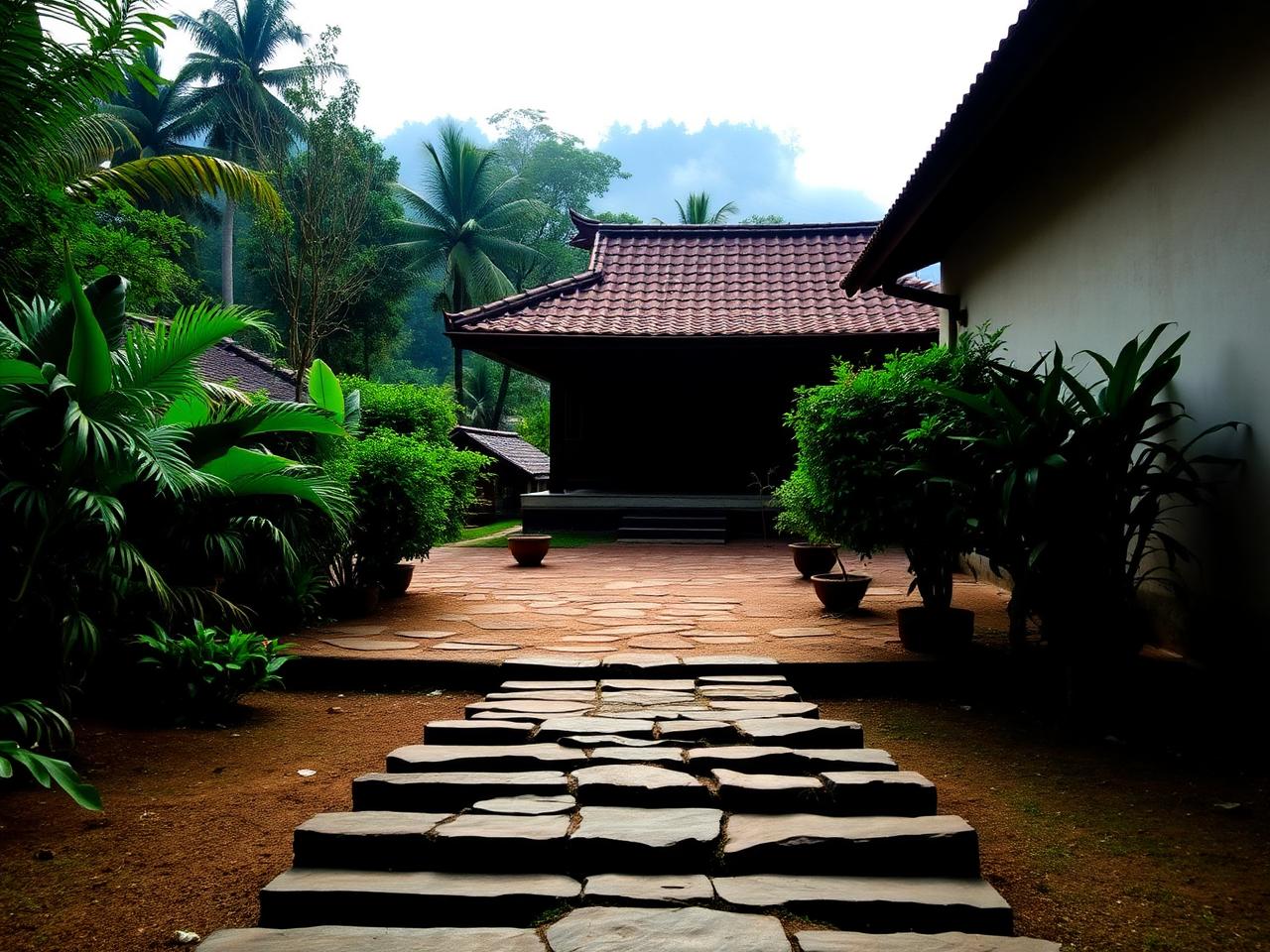
Which seekers are drawn to Zen?
Not every seeker is drawn to Zen, and not every seeker should be. These TruPath archetypes sit closer to or further from its temperament.
Drawn to inquiry and the exploration of fundamental questions.
Values disciplined methods and experiential verification over belief.
Brings simplicity and presence into everyday life.
Zen places less emphasis on devotional expression and surrender.
A short reflection points you toward the traditions, practices, and spaces that fit how you already move through the world. It takes about five minutes.
A doorway into the tradition.
Zen has long emphasized direct experience over intellectual understanding. Yet for many seekers, a good book can serve as a doorway into the tradition, offering context, orientation, and inspiration before stepping onto the cushion.
The works below are among the most influential introductions to Zen practice and philosophy.
Understanding the living atlas behind EasyDharma.
Read →A beginner's orientation to Zen history, philosophy, and practice.
Read →Books can illuminate the path, but Zen ultimately points beyond words. At some stage, every seeker is invited to move from reading about the practice to experiencing it directly.
The purpose of the Dharma Map is not to tell you where to go. It is to help you understand the terrain.
If Zen resonates, explore its lineages, practices, and spaces. If not, another river of wisdom may be calling.
Take the TruPath assessment